
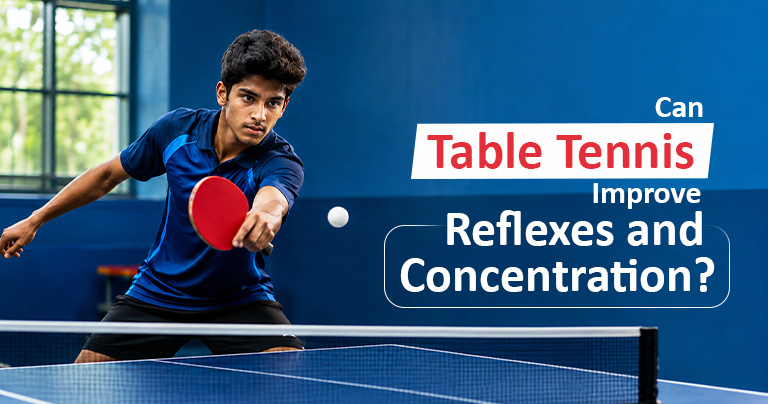
Summary: Table tennis is more than a recreational sport, as it requires quick reactions, constant attention, and precise hand-eye coordination. The fast movement of the ball encourages players to respond quickly and stay focused throughout each rally. Regular practice can help improve reaction speed, visual tracking, and concentration over time. The sport also requires players to anticipate an opponent’s shots and make decisions within seconds. With consistent training, these skills can support better focus and coordination both during gameplay and in everyday activities.
Introduction
Table tennis is a fast-paced sport that challenges both the body and mind. Every rally demands quick reactions, sharp observation, hand-eye coordination, and the ability to stay focused under pressure. For beginners and young athletes, regular practice can gradually improve these skills while also building discipline and confidence. Choosing the top sports classes in Bhubaneswar can provide structured training, proper guidance, and opportunities to develop these abilities through consistent practice and competitive exposure.
At IIG Sports Academy, students can explore sports training in a structured and supportive environment designed to encourage both skill development and overall growth. With regular coaching and practice, learners can understand the fundamentals of their chosen sport while improving fitness, coordination, concentration, and sporting discipline. A guided approach also helps young players build the confidence needed to participate actively and progress steadily.
How Table Tennis Trains Your Reflexes During Every Rally
Table tennis naturally challenges the body to react quickly because the ball can change direction, speed, and spin within a very short time. Players must watch the ball closely, judge its movement, and position their racket before making a shot. These repeated actions can gradually improve reaction time, hand-eye coordination, and body control. Beginners may initially struggle to respond to fast returns, but consistent practice helps them recognise patterns and react with greater confidence. This is one reason structured training at the top sports classes in Bhubaneswar can be useful for students who want to develop their sporting abilities through regular practice rather than occasional play.
Reflex development in table tennis is also connected with anticipation. Experienced players do not simply wait for the ball to reach them; they observe an opponent’s movement, racket angle, and shot direction to prepare their response. Training drills can help students practise these skills repeatedly in controlled situations. Over time, they may become more comfortable responding to different types of returns while maintaining balance and accuracy. The combination of movement, observation, and quick decision-making makes table tennis a practical sport for developing responsive physical skills.
Why Staying Focused Matters More Than Speed in Table Tennis
Speed alone does not make someone a good table tennis player. A player can have quick movements but still miss the ball if they lose concentration during a rally. Table tennis requires continuous attention because the ball travels rapidly and can change direction after contact with the racket. Players need to track its movement, understand the opponent’s shot, and decide how to respond. This constant visual and mental engagement makes concentration an important part of training. In table tennis coaching in Bhubaneswar, structured exercises can help students learn to remain attentive while gradually handling faster rallies and more challenging situations.
Concentration also becomes important when a player is under pressure. During a match, one missed shot can change the momentum, making it necessary to remain focused instead of becoming distracted by mistakes. Coaches can introduce drills that require players to maintain attention for longer periods and respond accurately to different shots. Learning to reset after an error is another valuable part of the process. With regular practice, students can develop better control over their attention and become more disciplined during games. These habits can also encourage patience, decision-making, and consistency beyond the table.
The Role of Hand-Eye Coordination in Faster Table Tennis Reactions
Hand-eye coordination is one of the most important abilities involved in table tennis. Players constantly use their eyes to track the approaching ball while their hands and arms adjust the racket to make accurate contact. The distance, angle, speed, and spin of the ball can all influence the required movement. Beginners often need time to develop this coordination because they are learning to connect what they see with how their body responds. Regular drills provide repeated opportunities to practise this connection and gradually make movements more controlled and natural.
A structured table tennis academy for students India can provide an environment where young players practise these skills progressively. Simple exercises may begin with basic forehand and backhand movements before introducing footwork, serves, returns, and faster rallies. As students become more comfortable, they can focus on timing their shots rather than simply trying to reach the ball. This gradual progression matters because coordination develops through repetition, correction, and experience. Rather than expecting instant improvement, consistent training allows students to understand their movements and make adjustments based on their performance.
How Regular Table Tennis Practice Can Improve Concentration
Concentration in table tennis is not limited to watching the ball. Players must pay attention to several things at once, including their opponent’s position, the direction of the shot, their own footwork, and the timing of their racket movement. During a rally, these decisions happen quickly, leaving little room for distraction. Regular practice gives players repeated exposure to these situations, helping them become more comfortable maintaining attention while moving and responding. The longer students practise, the more familiar these actions can become, allowing them to focus on strategy rather than worrying about every basic movement.
Consistent practice can also teach students how to manage attention when a game becomes difficult. A player may lose a point, face a difficult serve, or struggle against an opponent with a different playing style. Staying composed and focusing on the next point is an important part of competitive sport. Coaches can encourage this through match practice, focused drills, and exercises that require players to maintain accuracy over several rallies. These habits may help students approach table tennis with greater patience and discipline. The goal is not simply to play longer, but to learn how to stay mentally engaged throughout training and competition.
Table Tennis Training vs Online Games: Which Builds Real Skills?
A table tennis online game can provide entertainment and may introduce players to basic concepts such as serving, scoring, rallies, and different playing situations. Digital games can also require attention and quick responses, depending on their design. However, they cannot fully recreate the physical demands of playing table tennis in person. A real match involves movement, balance, racket control, hand-eye coordination, physical positioning, and judging the actual speed and spin of a moving ball. These skills depend on physical practice and cannot be developed to the same extent simply by interacting with a screen.
This does not mean online games have no place in a student’s routine. They can be an enjoyable way to understand the sport or spend leisure time, but they work best as a supplement rather than a replacement for physical training. Actual table tennis practice gives students opportunities to develop movement patterns, practise serves, respond to opponents, and learn from mistakes in real time. Working with a coach can further improve technique by identifying errors that may otherwise go unnoticed. For students interested in developing genuine sporting ability, regular practice at a training facility remains more valuable than relying only on digital versions of the game.
Choosing the Right Table Tennis Training for Young Students
The right training environment can make a significant difference to how comfortably a young student learns table tennis. Beginners usually need to understand basic techniques before moving into faster rallies or competitive matches. A good training programme should therefore introduce skills progressively, covering racket grip, stance, footwork, forehand and backhand strokes, serving, and returning. Students also benefit when coaches correct their technique early, as poor habits can become difficult to change later. Regular practice sessions should provide enough repetition to build confidence without making training unnecessarily complicated for beginners.
Parents looking for top sports classes in Bhubaneswar should consider factors such as coaching quality, training structure, practice opportunities, and whether the environment is suitable for the student’s age and ability. For students specifically interested in table tennis coaching in Bhubaneswar can offer a more focused approach than casual play. The objective should not be to make every child competitive immediately, but to help them develop sound fundamentals, concentration, fitness, coordination, and enjoyment of the sport. With consistent guidance and realistic goals, young players can gradually improve their skills while developing a disciplined approach to training.
Table tennis can be a practical way to develop quicker reactions, sharper concentration, coordination, and decision-making through regular practice. While online games can offer entertainment, real training provides the physical experience needed to build these skills. With proper guidance and consistent practice, students can steadily improve their technique and confidence. Those interested in structured sports training can explore the admission page and take the next step towards developing their sporting abilities in a supportive environment.
Click Here to Read This::- https://iigsports.in/updates/inside-indias-leading-volleyball-academies-facilities-training-success-stories/